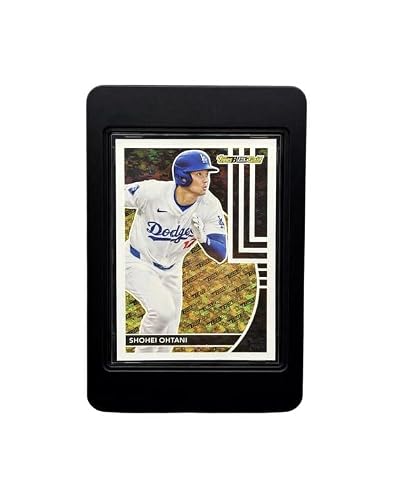
Magnetic Sports Card Holder 35pt – Premium Trading Card Display Case with UV Protection & Slide-Lock Design by M1NT (M1NT Signature)
- Protects your collection
- High quality materials
As an Amazon Associate and eBay Partner, we earn from qualifying purchases. Learn more
Should you actually send that card in? Enter your numbers and find out the expected profit — and the break-even — before you spend a cent. Works for PSA, SGC, and CGC.
Don't guess your values — see what graded copies actually sold for. We may earn a commission from eBay links.
Grading only makes sense when the jump from raw to graded value more than covers the fee, the round-trip shipping, and the risk that your card comes back a 9 (or lower) instead of a 10. The bigger the spread between the raw price and the PSA 10 price — and the cleaner the card — the more grading tips into profit.
One constant worth planning around: PSA's cheapest published tier still costs more than SGC's or CGC's, so low-dollar cards need a wider raw-to-graded spread before grading clears the fee. The other is that the gap between a 9 and a 10 stays wide on premium rookies, so the "is it a true 10?" question matters more than ever. That's exactly what this calculator pins down: it weights the PSA 10 upside against the very real chance of a 9.
Economy/bulk tiers, before shipping — always confirm current pricing on each grader's site, since fees move:
SGC and CGC turn the budget end of grading into a much easier yes right now; PSA still tends to carry the biggest 10-grade premium on resale, which is why the spread — not just the fee — decides it. For the full tier-by-tier breakdown, turnaround times, and what a submission really costs all-in, see our guide to collecting Ohtani cards.
One short email: what’s releasing, what’s worth grading, and the tools to decide. No spam, unsubscribe anytime.
No spam. Unsubscribe anytime.