Shohei Ohtani Refractors & Parallels: The Color Tiers Explained
What a refractor is, how the Chrome color-tier ladder works, and how to tell which Shohei Ohtani parallel you're holding — base refractor up to the 1/1 Superfractor. Live eBay listings for each tier.
Ask a new collector what makes one Ohtani Chrome card worth ten dollars and the next one worth ten thousand, and the honest answer is almost always the same word: parallel. The base card is the floor; everything above it is the refractor ladder, a color-coded scarcity system that Topps has run for decades. This page decodes that ladder for Shohei Ohtani specifically — what each tier is, how to tell them apart, and where each one trades. Every price you reach through the buttons here is a live eBay listing, never a number we invented.
What a refractor actually is
A refractor is a chromium card with a refractive coating — tilt it under light and it throws a rainbow shimmer the plain card doesn’t. Topps introduced the technology in the 1990s and still runs it today across Topps Chrome and Bowman Chrome. The important thing to understand: the plain base Chrome card is not a refractor. The refractor is the parallel version with the reflective finish, and it’s the first rung of a ladder that climbs, color by color, all the way to a single one-of-one card.
Not every parallel is a refractor, though. Refractors only live in Chrome products. A flagship paper parallel — a Rainbow Foil card, a bordered gold flagship — is a parallel but not a refractor. If someone’s talking about “the refractor,” they’re talking about a Chrome card. (For the wider picture of how card values are set, see what an Ohtani card is worth.)
The Chrome color-tier ladder, bottom to top
Every Chrome set runs its own version of this ladder, and the exact colors and print runs shift year to year — but the shape is remarkably consistent, and once you know it you can read any Ohtani Chrome card at a glance. From most common to rarest:
- Base refractor. The standard rainbow-shimmer parallel. Usually unnumbered and the most attainable rung — the natural first refractor to own.
- Patterned refractors (Atomic, Prism, Speckle, X-Fractor and the like). Same base scarcity tier as the refractor but with a distinctive textured finish. Which patterns exist depends on the set and year.
- The colored, numbered refractors. This is where scarcity takes off. As you climb the color ladder — commonly blue, then green, then gold, then orange, then red — the serial numbers drop and the price ceiling rises. The colored refractors carry a printed serial (a number over the print run); the lower that print run, the scarcer the card.
- The 1/1 Superfractor. The top of the ladder: a single one-of-one card with an unmistakable gold-swirl finish. There is exactly one per card in the set. For Ohtani, the Superfractor of his 2018 Bowman Chrome 1st Prospect Auto is the grail of grails.
Two honest cautions. First, exact print runs vary by set and year — a gold refractor is not always the same serial in every product — so read the number on the card rather than assuming. Second, the colors above are the common ladder; a given set may add or rename tiers. When in doubt, match the border color to that specific set’s parallel checklist and confirm with the serial.
Bowman Chrome vs. Topps Chrome — same finish, different meaning
This trips up more Ohtani buyers than anything else on the ladder. Both brands use the same refractor technology, but they mean very different things:
- Bowman Chrome is the prospect / first-card brand. Ohtani’s 2018 Bowman Chrome refractors — and especially the 1st Bowman Chrome Prospect Autograph — are his marquee prospect cards and his most valuable chase. But they are not his official rookie cards. The full breakdown of that set lives in our 2018 Bowman Chrome set review.
- Topps Chrome is flagship-based and carries the official RC logo. His 2018 Topps Chrome refractors are his true rookie-card refractors, and they’re the most liquid high-value Ohtani cards — enough of them trade to read a clean market. The full refractor ladder, the Update (#HMT1) and Sapphire variants are broken down in our 2018 Topps Chrome set review; where these sit in the pecking order is mapped on the most valuable Ohtani cards list.
If the rookie-vs-prospect distinction is new to you, start with the Ohtani rookie card guide — it settles which of his 2018 cards actually count as rookies.
How to buy a tier without overpaying
Because the market moves daily, the right move is never to trust a fixed price — it’s to pull up sold comps for the exact card in the exact grade before you buy. Identify your tier (base refractor vs. numbered gold vs. Superfractor), confirm the serial, then open the matching rail below and filter to sold listings. The scarcer the tier, the more you should insist on a graded (PSA or SGC) copy — Chrome surfaces ding easily, and a slab is your protection on anything with real money attached. Whether a given refractor is worth grading at all — and how much a PSA 10 really adds over the raw copy — is the whole subject of our PSA 10 vs raw buy-and-grade guide.
The rails below open live eBay listings for each rung of the ladder, from the attainable base refractor to the one-of-one Superfractor.
Find these cards on eBay
The cards on this list trade on eBay, not Amazon — these open live listings for each one. Buy graded (PSA or SGC) for anything above four figures.
Products Featured on This List

2026 SHOHEI OHTANI RARE SILVER PACK MOJO REFRACTOR BASEBALL CARD RAINBOW PRIZM - AMAZING COLORS AND GREAT PHOTO
2026 SHOHEI OHTANI RARE SILVER PACK MOJO REFRACTOR BASEBALL CARD RAINBOW PRIZM - AMAZING COLORS AND GREAT PHOTO. Great value retail product perfect for casual collectors and pack rippers.
- Great retail value
- Multiple packs included
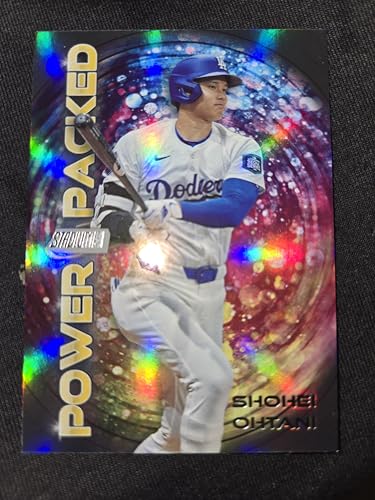
2025 STADIUM CLUB SHOHEI OHTANI POWER PACKED BASEBALL CARD REFRACTOR
2025 STADIUM CLUB SHOHEI OHTANI POWER PACKED BASEBALL CARD REFRACTOR. Great value retail product perfect for casual collectors and pack rippers.
- Great retail value
- Multiple packs included
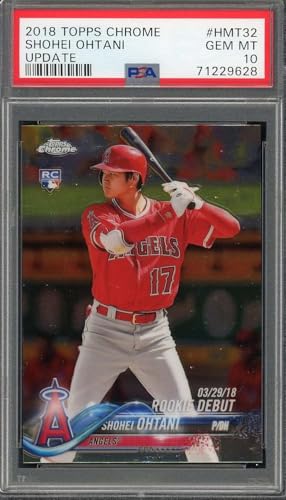
2018 Topps Chrome Update Shohei Ohtani Baseball Rookie Card #HMT32 Graded PSA 10
2018 Topps Chrome Update Shohei Ohtani Baseball Rookie Card #HMT32 Graded PSA 10. Professionally graded and authenticated for guaranteed condition.
- Professionally graded
- Authenticated condition