Beginner's Guide to Collecting Baseball Cards
New to the hobby? A plain-English guide to how baseball cards work — sets, parallels, rookies, grading, reading a listing, and where to buy — using Shohei Ohtani as the worked example.
If you’re new to baseball cards, the vocabulary can feel like a wall. This guide breaks down the essentials in plain English, using Shohei Ohtani cards as the running example since that’s what this site covers.
Sets, base, and inserts
Card companies release sets each year — Topps flagship, Topps Chrome, and Bowman are the names you’ll see constantly on modern cards; Panini held the license for some brands (Donruss, Prizm, Select) in earlier years before Topps became the sole current MLB license holder. Within a set, most cards are base cards — the standard, unnumbered version every collector can find. Inserts are separate themed mini-sets seeded randomly into packs (their own design, not a variant of a base card), and parallels are alternate-finish versions of base or insert cards — same photo, different color or foil treatment, often serial-numbered.
Rookies and prospects
A rookie card (RC) is a player’s first-year card, carrying an official RC logo. Prospect cards — like Bowman Chrome’s prospect line — can be issued even earlier, before a player has an official rookie season, and are a distinct category even though “rookie” gets used loosely for both in casual conversation. Ohtani is an unusual case: he came to MLB straight from Japan, so he has no prospect-card era at all. Even his 2018 Bowman Chrome card is an RC-logo rookie (#1), and his signed card there is a Rookie Autograph, not a prospect auto — see the rookie cards guide for the full set.
Reading a card listing like a collector
Every serious listing boils down to five facts, in this order: year, set, card number, parallel, and grade. Learn to read all five before you compare prices or bid on anything:
- Year and set — which year’s product, and which specific set within it (flagship, Chrome, Bowman, etc.). Two cards a year apart, or from two different sets in the same year, are not interchangeable even if they look similar.
- Card number — the number printed on the back (or sometimes the front), usually with a
#. It pins down the exact card within the set. - Parallel — the finish or color variant, if any. “Base” means no parallel. If a parallel is claimed, it should be visible in the design or confirmed by a printed serial number.
- Serial number — printed directly on the card in a format like
12/99, meaning card 12 of a run of 99. No printed number means the card isn’t a numbered parallel, no matter what the listing title claims. - Grade — if graded, the company (PSA, SGC, BGS) and the numeric grade, e.g. “PSA 10.” If ungraded, the listing should call it “raw” and describe condition in its own words, which is only ever the seller’s opinion.
Get comfortable reading those five off a listing photo and you’ll avoid the single most common beginner mistake: paying a premium for a card that isn’t actually what the title implies.
Condition and grading
Condition is everything, and professional graders look at four things every time: centering (is the image framed evenly, or off to one side?), corners (sharp, or soft and worn?), edges (clean, or chipped?), and surface (flawless, or scratched, printed with defects, or creased?). PSA, SGC, and BGS each inspect a card against those four factors, assign a numeric grade — most on a 1-to-10 scale, “Gem Mint” 10 at the top — and seal the card in a tamper-evident slab. A high grade can meaningfully change what a card is worth, but grading costs real money in fees and shipping, so use the grading ROI calculator to check whether the math actually works before you submit anything. Centering is the single factor most beginners misjudge — check it yourself with the card centering tool before you assume a card will grade well.
Where to buy
Individual cards (singles, rookies, autos, graded) trade mostly on eBay, where you can see live listings and completed sold prices — the sold tab, not the asking price of active listings, is the real market. Sealed boxes — if you’d rather rip and pull your own — are sold on Amazon and in hobby shops, with no guarantee of what you’ll pull. Whichever route you take, check recent sold comps for the exact card, parallel, and grade before you buy so you know what “normal” looks like.
Protecting your first cards
The cheapest insurance in the hobby, in order: a penny sleeve first (thin, close-fitting, keeps a card from scuffing against anything), then a rigid holder — a toploader or a magnetic one-touch case — for anything you’d be upset to damage, then a storage box or binder kept out of direct sunlight and away from humidity. Always sleeve a card before sliding it into a rigid holder — pushing a bare card straight into a toploader is one of the easiest ways to ding a corner on day one.
Where to go next
Ready to price a specific card? Head to the what’s it worth guide to learn how to pull sold comps. Want the fuller collecting strategy — budget ladders, spotting fakes, which of his 2018 rookie sets is which? See the collecting Shohei Ohtani cards guide — or, for the full catalog map across every era and brand, the complete Ohtani trading cards guide.
Live Ohtani auctions ending soon
LIVEReal-time eBay auctions · bids shown are current · tap a card to bid on eBay
Find these cards on eBay
Singles, parallels, autos and graded slabs trade on eBay, not Amazon — these open live listings for each type. Always check recent sold comps before you bid.
Recommended Products for This Guide
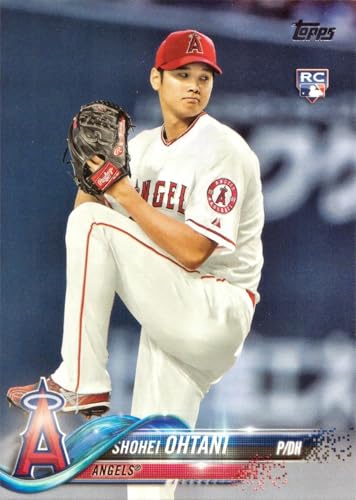
2018 Topps Baseball #700 Shohei Ohtani Rookie Card
2018 Topps Baseball #700 Shohei Ohtani Rookie Card. Great value retail product perfect for casual collectors and pack rippers.
- Great retail value
- Multiple packs included

2018 Topps Baseball #700 Shohei Ohtani Rookie Card Graded PSA 10 Gem Mint
2018 Topps Baseball #700 Shohei Ohtani Rookie Card Graded PSA 10 Gem Mint. Professionally graded and authenticated for guaranteed condition.
- Professionally graded
- Authenticated condition
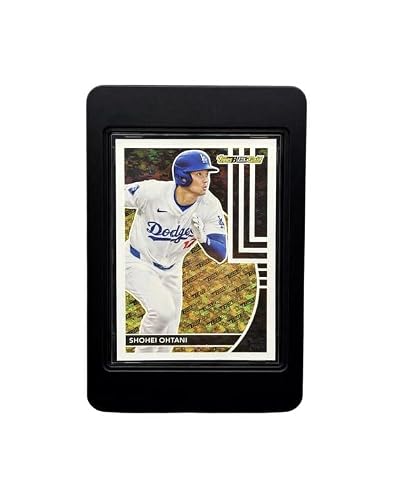
Magnetic Sports Card Holder 35pt – Premium Trading Card Display Case with UV Protection & Slide-Lock Design by M1NT (M1NT Signature)
Magnetic Sports Card Holder 35pt – Premium Trading Card Display Case with UV Protection & Slide-Lock Design by M1NT (M1NT Signature). Essential supplies to protect and display your card collection.
- Protects your collection
- High quality materials